
IGNOU BLIS COURSE:Eligibility, Fees, Syllabus, Admission & Career
Everything about IGNOU BLIS course — eligibility criteria, fee structure, full syllabus, ABC/DEB ID, step-by-step admission process, and career scope.
- 1. What exactly is BLIS? (and who it's actually for)
- 2. BLIS vs BLISOL vs MLIS — the confusion, cleared
- 3. Eligibility & medium of instruction
- 4. Duration, credits & course structure at a glance
- 5. Full course-by-course syllabus
- 6. How BLIS is taught — counselling hours & practicals
- 7. Fee structure
- 8. How to apply — step by step
- 9. ABC ID & DEB ID — why you can't skip them
- 10. Exam pattern, passing marks & division
- 11. Free study material & study centres
- 12. Career scope after BLIS
- 13. What after BLIS? (MLIS & beyond)
- 14. Common confusions — busted
- 15. Frequently Asked Questions
1. What exactly is BLIS? (and who it's actually for)
Picture a college library, a government office library, or the library in a school near your house. Someone has to organise every single book, journal, and digital file in there so that anyone can find what they need in seconds. That "someone" is a trained library and information professional — and BLIS is the degree IGNOU built to train exactly that person.
IGNOU started this programme way back in 1989, gave it a full revision in 2000, and updated it again in 2014 to catch up with computers and the internet changing how libraries work. It's run by the Faculty of Library and Information Science, which sits inside the School of Social Sciences (SOSS) at IGNOU.
Here's the one thing almost nobody tells you clearly: BLIS is a second, add-on Bachelor's degree — not a first one. IGNOU's own programme guide describes it as "the first degree in Library and Information Science, after a Basic Degree (graduation) in any of the streams of knowledge." In plain words — you cannot walk into BLIS straight after Class 12. You need a completed Bachelor's degree first, in absolutely any subject (History, Commerce, Science, whatever), and BLIS then sits on top of that as a focused, one-year professional qualification.
2. BLIS vs BLISOL vs MLIS — the confusion, cleared
Search "IGNOU BLIS" online and you'll run into at least three different-sounding names. Here's what each one actually is, straight from IGNOU's own live pages:
| Programme | Mode | Level | Who it's for | Fee (approx.) |
|---|---|---|---|---|
| BLIS | ODL (regular distance mode) | Bachelor's (add-on) | Graduates in any subject | ₹9,000 total |
| BLISOL | Online | Bachelor's (add-on) | Graduates, studied fully online | ₹8,500 (national) |
| MLIS | ODL | Master's (next step) | BLIS-degree holders | Check live MLIS page |
So BLIS and BLISOL are essentially the same 10-course, 40-credit curriculum — the only real difference is delivery mode (printed study material + Study Centre counselling for BLIS, versus a fully online LMS for BLISOL). MLIS is a completely different, higher-level programme you take after finishing BLIS. This guide focuses on the regular ODL BLIS programme, since that's what most learners mean when they search "IGNOU BLIS."
3. Eligibility & medium of instruction
You qualify for BLIS admission if you meet any one of these three official routes:
- Route 1: A Bachelor's degree with 50% marks (45% for SC/ST/OBC/PH category), in any subject from any recognised university.
- Route 2: A Bachelor's degree plus a 1-year Diploma in Library Science.
- Route 3: A Bachelor's degree plus 2 years of working experience in a Library & Information Centre.
- Age limit: None mentioned on the official page.
- Entrance test: None — admission is direct, based on eligibility.
- Medium of instruction: English only. However, students are allowed to write their assignments and Term-End Examination in Hindi as well.
- International students: Not offered for International Students, per the official fee-structure note.
4. Duration, credits & course structure at a glance
BLIS is deliberately compact — no multi-year ladder, no exit-and-re-enter scheme like some newer IGNOU UG programmes. It's one straightforward package:
The 4 purely theory-based courses are BLI-221, BLI-222, BLI-223, and BLIE-226. The remaining 6 courses — BLI-224, BLI-225, BLIE-227, BLIE-228, BLIE-229, and BLII-230 (Internship) — carry a practical component, meaning you don't just read about libraries, you actually do hands-on classification, cataloguing, computer, and internship work.
5. Full course-by-course syllabus
Every course carries 4 credits. Here's what each one actually teaches you, in plain language:
| Code | Course Title | Type | What it covers |
|---|---|---|---|
| BLI-221 | Library, Information and Society | Theory | Types of libraries, library laws in India, library networks, and the library profession itself. |
| BLI-222 | Information Sources and Services | Theory | How to categorise and use different information sources, reference services, and user studies. |
| BLI-223 | Organising and Managing Information | Theory | Classification, cataloguing, subject indexing, and how digital tools have changed all of this. |
| BLI-224 | ICT Fundamentals | Theory + Practical | Basic computer, network, and internet technology every modern library professional needs. |
| BLI-225 | Communication Skills | Theory + Practical | Workplace communication, interview prep, presentation and report-writing skills. |
| BLIE-226 | Management of Library and Information Centre | Theory | Management principles, budgeting, and human-resource handling inside a library setup. |
| BLIE-227 | Document Processing: Practice | Practical (hands-on) | Real classification (DDC) and cataloguing (AACR2R, MARC21) practice using actual tools. |
| BLIE-228 | Information Products and Services | Theory + Practical | Bibliographic services, current-awareness services, and document delivery in practice. |
| BLIE-229 | ICT in Libraries | Theory + Practical | Library automation software, and building digital libraries using tools like KOHA and DSpace. |
| BLII-230 | Internship | Practical (fieldwork) | A supervised placement in a real library or information centre to apply everything you've learned. |
6. How BLIS is taught — counselling hours & practicals
BLIS follows IGNOU's usual distance-learning approach: printed self-learning material at home, plus periodic face-to-face counselling sessions at your allotted Study Centre. Here's exactly how many hours are allotted per course, straight from the official Programme Guide:
| Course | Theory Counselling | Practical Hours |
|---|---|---|
| BLI-221, BLI-222, BLI-223, BLI-225, BLIE-226, BLIE-228 | 20 hours each | — |
| BLI-224, BLIE-229 | 10 hours each | 15 hours compulsory computer practical each |
| BLIE-227 | — | 30 hours (hands-on practical only) |
Each counselling session runs for 2 hours. There's no separate practical counselling for BLIE-228 — its practical component is folded into the theory sessions. Computers and relevant software for BLI-224 and BLIE-229 are provided to you at the Study Centre itself.
7. Fee structure
Straight from IGNOU's own live BLIS programme page:
- ₹9,000 for the entire programme — this is a one-time total fee, not per year, since BLIS itself is only a 1-year programme.
- A registration/application fee of approximately ₹300 is paid separately on the Samarth portal at the time of admission.
- Exam fee is not included in the programme fee — it's decided by the University closer to each Term-End Exam cycle.
8. How to apply — step by step
- Create your APAAR/ABC ID via DigiLocker, then generate your DEB ID from it at deb.ugc.ac.in (see section 9 below) — do this before you touch the admission form.
- Go to ignouadmission.samarth.edu.in and click "New Registration."
- Register with a working mobile number and email — both get verified by OTP.
- Set up your username and an 8–16 character alphanumeric password.
- Log in, select BLIS under Bachelor's Degree programmes (School of Social Sciences), and choose your Regional Centre.
- Upload scanned photograph, signature, your graduation marksheet and certificate, category certificate (if applicable), and your Library Science Diploma or experience certificate (whichever eligibility route applies to you).
- Pay the ~₹300 registration fee, then the ₹9,000 programme fee — both online via card/net banking.
- Submit, save/print your confirmation, and wait for document verification. Study material dispatch follows once admission is confirmed.
9. ABC ID & DEB ID — why you can't skip them
Two IDs, not one, now stand between you and a submitted BLIS application:
- APAAR/ABC ID (Academic Bank of Credits ID): a national academic-credit identity created through DigiLocker under NEP 2020. This is compulsory for every fresh IGNOU admission from the 2026 session onward.
- DEB ID (Distance Education Bureau ID): a newer, additional identifier required specifically for anyone joining an ODL or Online programme. You generate it using your already-created ABC ID at deb.ugc.ac.in.
Set both of these up well before your application deadline — government portals tend to slow down or glitch when everyone rushes in during the last 48 hours.
10. Exam pattern, passing marks & division
This is where BLIS quietly differs from several other IGNOU UG programmes, and it trips a lot of students up. Each course is evaluated through two components:
- Continuous Evaluation (CE) — 30% weightage: one assignment per course, evaluated by your counsellor. You must score a minimum of 40% here to be eligible for the Term-End Exam.
- Term-End Examination (TEE) — 70% weightage: held twice a year, in June and December. You need a minimum of 40% here as well, separately.
You also can't sit for the TEE immediately — you become eligible only after a minimum of one year from your date of registration. Once you clear a course, your final result is graded into a division:
| Division | Aggregate Marks Needed |
|---|---|
| Division I | 60% and above |
| Division II | 50% and above |
| Pass | 40% and above |
If you score below 40% in a course, or miss a TEE sitting, you can reappear at the next cycle — but you must clear every course within the maximum 2-year window from your registration date. Miss that window and you'll need to re-register as a completely fresh candidate.
11. Free study material & study centres
Every BLIS student is attached to a Study Centre, which is your point of contact for counselling sessions, practical work facilities, and basic library access. All course material is also freely downloadable in digital form from eGyanKosh, IGNOU's official repository — search "BLIS" there for block-wise units of every single course listed above.
12. Career scope after BLIS
According to IGNOU's own Job/Future Prospects listing for the programme, a BLIS graduate is positioned for roles such as:
Because BLIS assumes you already hold a first degree, it works especially well for two kinds of people: fresh graduates who want a genuinely employable, hands-on professional skill fast, and people already working informally in libraries who want a recognised credential to match the job they're already doing.
13. What after BLIS? (MLIS & beyond)
Once you complete BLIS, you become eligible for IGNOU's MLIS (Master of Library and Information Science) — the official MLIS page states plainly that the programme is available to candidates who hold a BLIS degree (or its equivalent) from any recognised university, with weightage given to candidates who already have library work experience. MLIS is a 1–2 year Master's programme and is the natural next step if you want to move into senior librarian, information-management, or research-oriented roles.
14. Common confusions — busted
15. Frequently Asked Questions
Yes. IGNOU is a Central University established by an Act of Parliament, and its degrees are recognised by every member university of the Association of Indian Universities (AIU). IGNOU's ODL programmes are also exempted from separate UGC approval under a 2021 UGC notification.
No. BLIS requires a completed Bachelor's degree (in any subject) as the minimum entry qualification, or a Bachelor's degree combined with a Library Science Diploma or two years of library work experience. It cannot be taken straight after 10+2.
No. Admission is direct and merit-based on your existing qualification — there is no separate entrance test to clear.
IGNOU's official BLIS programme page states the fee as ₹9,000 for the entire one-year programme, paid as a one-time amount, plus a separate registration fee of around ₹300 and an exam fee decided closer to the Term-End Exam. Confirm the exact live amount on the Samarth payment page before paying.
No. IGNOU's official fee-structure page for BLIS explicitly states this programme is not offered to international students.
They cover the same 10-course, 40-credit curriculum. BLIS is delivered in regular distance (ODL) mode with printed material and Study Centre counselling, while BLISOL is the fully online version delivered through IGNOU's Online Programmes platform, with a different fee structure.
You need a minimum of 40% separately in Continuous Evaluation (assignments) and in the Term-End Examination for each course. Scoring high in one component does not compensate for falling short in the other — both must individually cross 40%.
Yes. BLII-230 Internship is one of the 10 mandatory courses, carrying 4 credits, and involves a supervised placement in a real library or information centre so you can apply your classroom learning practically.
Yes. IGNOU's official MLIS programme page states that MLIS is available to candidates holding a BLIS degree or its equivalent from any recognised university, with preference given to those who also have library work experience.
The APAAR/ABC ID is a national academic-credit identity created via DigiLocker under NEP 2020, mandatory for all fresh IGNOU admissions. The DEB ID (Distance Education Bureau ID) is an additional identifier, generated from your ABC ID, required specifically for anyone joining an ODL or Online programme like BLIS.
All BLIS Self-Learning Material is available free on eGyanKosh, IGNOU's official digital repository, and your allotted Study Centre also provides counselling sessions and practical facilities through the year.
The maximum period to complete BLIS is 2 years from your date of registration. If you haven't secured a pass percentage in every course by then, you'll need to re-register as a fresh candidate to continue the programme.
Yes. While BLIS is currently offered in English medium only, students are permitted to write both their assignments and the Term-End Examination in Hindi as well.
IGNOU has extended the July 2026 admission deadline for ODL and Online programmes to 16 August 2026. This deadline has already been pushed back multiple times this session, so apply as early as possible rather than waiting for another extension.
BLIS packs classification systems, cataloguing standards, ICT tools, and a real internship into just 10 courses and one year — which means every counselling session and every assignment deadline actually matters. IGNOU Simplified builds free, structured study guides, PYQs, and exam-prep resources for IGNOU programmes, so you spend your limited time on what actually helps in assignments, practicals, and Term-End Exams.
Also read: What to Do After IGNOU Admission — Complete Guide | IGNOU Re-Registration — Complete Guide | IGNOU BAG Sociology — Complete Guide
(Wishing you all the best for your future)
Sources
- IGNOU official programme page — BLIS: ignou.ac.in/schools/programme/BLIS
- IGNOU official programme page — BLISOL: ignou.ac.in/schools/programme/BLISOL
- IGNOU official programme page — MLIS: ignou.ac.in/schools/programme/MLIS
- IGNOU BLIS Programme Guide (PG-BLIS, July 2022 Revised): ignou.ac.in/viewFile/SOSS/programmeguide/PG-BLIS.pdf
- IGNOU Common Prospectus, July 2026 (BLIS Programme Details, School of Social Sciences): ignou.ac.in/viewFile/services/Common_Prospectus/common-prospectus-july-2026-V-L-1-1.pdf
- eGyanKosh — official digital repository for BLIS course material: egyankosh.ac.in
- IGNOU Samarth admission portal: ignouadmission.samarth.edu.in
- DEB (Distance Education Bureau) ID portal: deb.ugc.ac.in
- News reports on the July 2026 admission deadline extension to 16 August 2026 (Free Press Journal, Greater Kashmir, Careers360) — verify the current live status on ignouadmission.samarth.edu.in before applying
- 1. BLIS असल में है क्या? (और यह किसके लिए है)
- 2. BLIS vs BLISOL vs MLIS — कन्फ्यूज़न दूर करते हैं
- 3. एलिजिबिलिटी और पढ़ाई का माध्यम
- 4. ड्यूरेशन, क्रेडिट्स और कोर्स स्ट्रक्चर एक नज़र में
- 5. कोर्स-वाइज़ पूरा सिलेबस
- 6. BLIS कैसे पढ़ाया जाता है — काउंसलिंग घंटे और प्रैक्टिकल्स
- 7. फीस स्ट्रक्चर
- 8. अप्लाई कैसे करें — स्टेप बाय स्टेप
- 9. ABC ID और DEB ID — क्यों स्किप नहीं कर सकते
- 10. एग्ज़ाम पैटर्न, पासिंग मार्क्स और डिवीज़न
- 11. मुफ्त स्टडी मटीरियल और स्टडी सेंटर्स
- 12. BLIS के बाद करियर स्कोप
- 13. BLIS के बाद क्या? (MLIS और आगे)
- 14. आम कन्फ्यूज़न — साफ हो गईं
- 15. अक्सर पूछे जाने वाले सवाल
1. BLIS असल में है क्या? (और यह किसके लिए है)
ज़रा सोचिए — कॉलेज की लाइब्रेरी, सरकारी दफ्तर की लाइब्रेरी, या आपके घर के पास वाले स्कूल की लाइब्रेरी। वहां रखी हर किताब, हर जर्नल, हर डिजिटल फाइल को किसी न किसी को इस तरह ऑर्गनाइज़ करना पड़ता है कि कोई भी सेकंडों में अपनी ज़रूरत की चीज़ ढूंढ ले। वो "कोई" ही एक ट्रेंड लाइब्रेरी और इन्फॉर्मेशन प्रोफेशनल होता है — और BLIS वो डिग्री है जो IGNOU ने बिल्कुल इसी इंसान को तैयार करने के लिए बनाई है।
IGNOU ने यह प्रोग्राम 1989 में शुरू किया, साल 2000 में इसे पूरी तरह रिवाइज़ किया, और 2014 में फिर से अपडेट किया ताकि कंप्यूटर और इंटरनेट की वजह से लाइब्रेरी के काम में आए बदलावों को कवर किया जा सके। यह Faculty of Library and Information Science चलाती है, जो IGNOU के School of Social Sciences (SOSS) के अंदर आती है।
अब वो बात, जो लगभग कोई साफ-साफ नहीं बताता: BLIS एक सेकंड, ऐड-ऑन बैचलर डिग्री है — पहली नहीं। IGNOU की अपनी प्रोग्राम गाइड इसे "किसी भी स्ट्रीम में Basic Degree (ग्रेजुएशन) के बाद, Library and Information Science की पहली डिग्री" बताती है। सीधी भाषा में — आप 12वीं के तुरंत बाद सीधे BLIS में एडमिशन नहीं ले सकते। पहले आपके पास किसी भी सब्जेक्ट (History, Commerce, Science, कुछ भी) में पूरी हुई बैचलर डिग्री होनी चाहिए, और उसके ऊपर BLIS एक फोकस्ड, एक साल का प्रोफेशनल क्वालिफिकेशन जोड़ती है।
2. BLIS vs BLISOL vs MLIS — कन्फ्यूज़न दूर करते हैं
ऑनलाइन "IGNOU BLIS" सर्च करें तो कम से कम तीन अलग-अलग सुनाई देने वाले नाम मिलेंगे। यहां बताया गया है कि हर एक असल में क्या है, सीधे IGNOU की अपनी लाइव पेज से:
| प्रोग्राम | मोड | लेवल | किसके लिए | फीस (लगभग) |
|---|---|---|---|---|
| BLIS | ODL (रेगुलर डिस्टेंस मोड) | बैचलर (ऐड-ऑन) | किसी भी सब्जेक्ट के ग्रेजुएट्स | कुल ₹9,000 |
| BLISOL | ऑनलाइन | बैचलर (ऐड-ऑन) | ग्रेजुएट्स, पूरी तरह ऑनलाइन पढ़ाई | ₹8,500 (नेशनल) |
| MLIS | ODL | मास्टर्स (अगला स्टेप) | BLIS-डिग्री होल्डर्स | लाइव MLIS पेज चेक करें |
तो BLIS और BLISOL में असल में वही 10-कोर्स, 40-क्रेडिट करिकुलम है — असली फर्क सिर्फ पढ़ाने के तरीके में है (BLIS के लिए प्रिंटेड स्टडी मटीरियल + Study Centre काउंसलिंग, जबकि BLISOL पूरी तरह ऑनलाइन LMS से पढ़ाया जाता है)। MLIS एक बिल्कुल अलग, हायर-लेवल प्रोग्राम है जो आप BLIS पूरी करने के बाद करते हैं। यह गाइड रेगुलर ODL BLIS प्रोग्राम पर फोकस करती है, क्योंकि ज़्यादातर लोग "IGNOU BLIS" सर्च करते वक्त यही मतलब निकालते हैं।
3. एलिजिबिलिटी और पढ़ाई का माध्यम
BLIS एडमिशन के लिए इन तीन ऑफिशियल रास्तों में से कोई भी एक पूरा होना चाहिए:
- रास्ता 1: किसी भी मान्यता प्राप्त यूनिवर्सिटी से, किसी भी सब्जेक्ट में, 50% मार्क्स (SC/ST/OBC/PH के लिए 45%) के साथ बैचलर डिग्री।
- रास्ता 2: बैचलर डिग्री + 1 साल का Library Science में Diploma।
- रास्ता 3: बैचलर डिग्री + किसी Library & Information Centre में 2 साल का काम का अनुभव।
- उम्र सीमा: ऑफिशियल पेज पर कोई नहीं बताई गई।
- एंट्रेंस टेस्ट: कोई नहीं — एडमिशन सीधे एलिजिबिलिटी के आधार पर होता है।
- पढ़ाई का माध्यम: सिर्फ अंग्रेज़ी। हालांकि, स्टूडेंट्स अपने असाइनमेंट और Term-End Examination हिंदी में भी लिख सकते हैं।
- इंटरनेशनल स्टूडेंट्स: ऑफिशियल फीस-स्ट्रक्चर नोट के अनुसार, यह प्रोग्राम इंटरनेशनल स्टूडेंट्स के लिए ऑफर नहीं किया जाता।
4. ड्यूरेशन, क्रेडिट्स और कोर्स स्ट्रक्चर एक नज़र में
BLIS जान-बूझकर छोटा और कॉम्पैक्ट रखा गया है — कोई मल्टी-ईयर सीढ़ी नहीं, कुछ नए IGNOU UG प्रोग्रामों जैसी exit-and-re-enter स्कीम नहीं। यह एक सीधा-सादा पैकेज है:
4 पूरी तरह थ्योरी-बेस्ड कोर्स हैं — BLI-221, BLI-222, BLI-223, और BLIE-226। बाकी 6 कोर्स — BLI-224, BLI-225, BLIE-227, BLIE-228, BLIE-229, और BLII-230 (Internship) — में प्रैक्टिकल कॉम्पोनेंट होता है, यानी आप सिर्फ लाइब्रेरी के बारे में पढ़ते नहीं, बल्कि सच में क्लासिफिकेशन, कैटलॉगिंग, कंप्यूटर और इंटर्नशिप का काम खुद करते हैं।
5. कोर्स-वाइज़ पूरा सिलेबस
हर कोर्स 4 क्रेडिट का है। यहां आसान भाषा में बताया गया है कि हर एक कोर्स असल में क्या सिखाता है:
| कोड | कोर्स का नाम | टाइप | क्या कवर होता है |
|---|---|---|---|
| BLI-221 | Library, Information and Society | थ्योरी | लाइब्रेरी के प्रकार, भारत में लाइब्रेरी कानून, लाइब्रेरी नेटवर्क्स, और खुद लाइब्रेरी प्रोफेशन। |
| BLI-222 | Information Sources and Services | थ्योरी | अलग-अलग इन्फॉर्मेशन सोर्सेज़ को कैसे कैटेगराइज़ और इस्तेमाल करें, रेफरेंस सर्विसेज़, और यूज़र स्टडीज़। |
| BLI-223 | Organising and Managing Information | थ्योरी | क्लासिफिकेशन, कैटलॉगिंग, सब्जेक्ट इंडेक्सिंग, और डिजिटल टूल्स ने इसे कैसे बदल दिया है। |
| BLI-224 | ICT Fundamentals | थ्योरी + प्रैक्टिकल | हर मॉडर्न लाइब्रेरी प्रोफेशनल के लिए ज़रूरी बेसिक कंप्यूटर, नेटवर्क और इंटरनेट टेक्नोलॉजी। |
| BLI-225 | Communication Skills | थ्योरी + प्रैक्टिकल | वर्कप्लेस कम्युनिकेशन, इंटरव्यू की तैयारी, प्रेजेंटेशन और रिपोर्ट-राइटिंग स्किल्स। |
| BLIE-226 | Management of Library and Information Centre | थ्योरी | मैनेजमेंट के सिद्धांत, बजटिंग, और लाइब्रेरी सेटअप में ह्यूमन-रिसोर्स हैंडलिंग। |
| BLIE-227 | Document Processing: Practice | प्रैक्टिकल (हैंड्स-ऑन) | असली टूल्स इस्तेमाल करके क्लासिफिकेशन (DDC) और कैटलॉगिंग (AACR2R, MARC21) की प्रैक्टिस। |
| BLIE-228 | Information Products and Services | थ्योरी + प्रैक्टिकल | बिबलियोग्राफिक सर्विसेज़, करंट-अवेयरनेस सर्विसेज़, और प्रैक्टिस में डॉक्यूमेंट डिलीवरी। |
| BLIE-229 | ICT in Libraries | थ्योरी + प्रैक्टिकल | लाइब्रेरी ऑटोमेशन सॉफ्टवेयर, और KOHA व DSpace जैसे टूल्स से डिजिटल लाइब्रेरी बनाना। |
| BLII-230 | Internship | प्रैक्टिकल (फील्डवर्क) | असली लाइब्रेरी या इन्फॉर्मेशन सेंटर में सुपरवाइज़्ड प्लेसमेंट, ताकि आप जो सीखा है वो लागू कर सकें। |
6. BLIS कैसे पढ़ाया जाता है — काउंसलिंग घंटे और प्रैक्टिकल्स
BLIS भी IGNOU के आम डिस्टेंस-लर्निंग तरीके पर चलता है: घर पर प्रिंटेड सेल्फ-लर्निंग मटीरियल, प्लस आपके अलॉटेड Study Centre पर समय-समय पर होने वाले फेस-टू-फेस काउंसलिंग सेशंस। ऑफिशियल Programme Guide के अनुसार हर कोर्स के लिए ठीक कितने घंटे दिए जाते हैं, देखिए:
| कोर्स | थ्योरी काउंसलिंग | प्रैक्टिकल घंटे |
|---|---|---|
| BLI-221, BLI-222, BLI-223, BLI-225, BLIE-226, BLIE-228 | हर एक में 20 घंटे | — |
| BLI-224, BLIE-229 | हर एक में 10 घंटे | हर एक में 15 घंटे अनिवार्य कंप्यूटर प्रैक्टिकल |
| BLIE-227 | — | 30 घंटे (सिर्फ हैंड्स-ऑन प्रैक्टिकल) |
हर काउंसलिंग सेशन 2 घंटे का होता है। BLIE-228 के लिए कोई अलग प्रैक्टिकल काउंसलिंग नहीं है — इसका प्रैक्टिकल कॉम्पोनेंट थ्योरी सेशंस में ही शामिल है। BLI-224 और BLIE-229 के लिए कंप्यूटर और ज़रूरी सॉफ्टवेयर आपको Study Centre पर ही उपलब्ध कराए जाते हैं।
7. फीस स्ट्रक्चर
सीधे IGNOU की अपनी लाइव BLIS प्रोग्राम पेज से:
- पूरे प्रोग्राम के लिए ₹9,000 — यह एक वन-टाइम टोटल फीस है, हर साल की नहीं, क्योंकि BLIS खुद सिर्फ 1 साल का प्रोग्राम है।
- लगभग ₹300 की रजिस्ट्रेशन/एप्लीकेशन फीस Samarth पोर्टल पर एडमिशन के समय अलग से देनी होती है।
- एग्ज़ाम फीस प्रोग्राम फीस में शामिल नहीं है — यह हर Term-End Exam साइकल के करीब यूनिवर्सिटी तय करती है।
8. अप्लाई कैसे करें — स्टेप बाय स्टेप
- DigiLocker के ज़रिए अपनी APAAR/ABC ID बनाएं, फिर उससे deb.ugc.ac.in पर अपनी DEB ID जनरेट करें (नीचे सेक्शन 9 देखें) — एडमिशन फॉर्म भरने से पहले यह ज़रूर कर लें।
- ignouadmission.samarth.edu.in पर जाएं और "New Registration" पर क्लिक करें।
- एक चालू मोबाइल नंबर और ईमेल से रजिस्टर करें — दोनों पर OTP वेरिफिकेशन होगा।
- अपना यूज़रनेम और 8–16 कैरेक्टर का alphanumeric पासवर्ड सेट करें।
- लॉगिन करें, Bachelor's Degree प्रोग्रामों (School of Social Sciences) के अंदर BLIS चुनें, और अपना Regional Centre सिलेक्ट करें।
- स्कैन की हुई फोटो, सिग्नेचर, अपनी ग्रेजुएशन मार्कशीट और सर्टिफिकेट, कैटेगरी सर्टिफिकेट (अगर लागू हो), और अपना Library Science Diploma या experience certificate (जो भी एलिजिबिलिटी रास्ता आप पर लागू होता है) अपलोड करें।
- पहले लगभग ₹300 की रजिस्ट्रेशन फीस, फिर ₹9,000 की प्रोग्राम फीस — दोनों ऑनलाइन कार्ड/नेट बैंकिंग से पे करें।
- सबमिट करें, अपनी कन्फर्मेशन सेव/प्रिंट करें, और डॉक्यूमेंट वेरिफिकेशन का इंतज़ार करें। एडमिशन कन्फर्म होते ही स्टडी मटीरियल भेज दिया जाता है।
9. ABC ID और DEB ID — क्यों स्किप नहीं कर सकते
अब आपके सबमिट किए गए BLIS एप्लीकेशन और आपके बीच एक नहीं, दो IDs खड़ी हैं:
- APAAR/ABC ID (Academic Bank of Credits ID): NEP 2020 के तहत DigiLocker से बनाई गई एक नेशनल एकेडमिक-क्रेडिट पहचान। यह 2026 सेशन से हर फ्रेश IGNOU एडमिशन के लिए अनिवार्य है।
- DEB ID (Distance Education Bureau ID): एक नई, एडिशनल पहचान, जो खासतौर पर BLIS जैसे ODL या Online प्रोग्राम जॉइन करने वाले हर किसी के लिए ज़रूरी है। यह आप अपनी पहले से बनी ABC ID से deb.ugc.ac.in पर जनरेट करते हैं।
अपनी डेडलाइन से काफी पहले दोनों बना लीजिए — सरकारी पोर्टल्स अक्सर आखिरी 48 घंटों में सब लोगों के एक साथ आने से धीमे पड़ जाते हैं या ग्लिच करते हैं।
10. एग्ज़ाम पैटर्न, पासिंग मार्क्स और डिवीज़न
यहीं पर BLIS कई दूसरे IGNOU UG प्रोग्रामों से चुपचाप अलग हो जाता है, और यहीं बहुत सारे स्टूडेंट्स गच्चा खा जाते हैं। हर कोर्स को दो कॉम्पोनेंट्स से इवैल्यूएट किया जाता है:
- Continuous Evaluation (CE) — 30% वेटेज: हर कोर्स में एक असाइनमेंट, जिसे आपका काउंसलर इवैल्यूएट करता है। Term-End Exam के लिए एलिजिबल होने के लिए यहां कम से कम 40% चाहिए।
- Term-End Examination (TEE) — 70% वेटेज: साल में दो बार, जून और दिसंबर में होता है। यहां भी अलग से कम से कम 40% चाहिए।
आप TEE में तुरंत भी नहीं बैठ सकते — आप अपने रजिस्ट्रेशन की तारीख से कम से कम एक साल बाद ही एलिजिबल होते हैं। एक बार कोई कोर्स क्लियर करने पर, आपका फाइनल रिज़ल्ट किसी डिवीज़न में ग्रेड होता है:
| डिवीज़न | ज़रूरी एग्रीगेट मार्क्स |
|---|---|
| Division I | 60% और उससे ऊपर |
| Division II | 50% और उससे ऊपर |
| Pass | 40% और उससे ऊपर |
अगर किसी कोर्स में आपके 40% से कम आते हैं, या आप कोई TEE मिस कर देते हैं, तो आप अगले साइकल में दोबारा बैठ सकते हैं — लेकिन आपको हर कोर्स अपने रजिस्ट्रेशन से मैक्सिमम 2 साल के अंदर क्लियर करना होगा। यह विंडो मिस करने पर, प्रोग्राम जारी रखने के लिए आपको बिल्कुल फ्रेश कैंडिडेट की तरह दोबारा रजिस्टर करना होगा।
11. मुफ्त स्टडी मटीरियल और स्टडी सेंटर्स
हर BLIS स्टूडेंट को एक Study Centre से जोड़ा जाता है, जो काउंसलिंग सेशंस, प्रैक्टिकल वर्क की सुविधाओं, और बेसिक लाइब्रेरी एक्सेस के लिए आपका कॉन्टैक्ट पॉइंट होता है। सारा कोर्स मटीरियल eGyanKosh पर भी मुफ्त में डिजिटल फॉर्म में डाउनलोड किया जा सकता है, जो IGNOU का ऑफिशियल रिपॉज़िटरी है — वहां "BLIS" सर्च करके ऊपर बताए गए हर कोर्स के block-wise units देखें।
12. BLIS के बाद करियर स्कोप
IGNOU की अपनी Job/Future Prospects लिस्टिंग के अनुसार, एक BLIS ग्रेजुएट इन रोल्स के लिए तैयार होता है:
चूंकि BLIS पहले से ही आपके पास एक फर्स्ट डिग्री होना मान लेता है, यह खासतौर पर दो तरह के लोगों के लिए अच्छा काम करता है: फ्रेश ग्रेजुएट्स जो जल्दी से एक सच में एम्प्लॉयेबल, हैंड्स-ऑन प्रोफेशनल स्किल चाहते हैं, और वो लोग जो पहले से इनफॉर्मल तरीके से किसी लाइब्रेरी में काम कर रहे हैं और अपने काम के लिए एक मान्यता प्राप्त क्रेडेंशियल चाहते हैं।
13. BLIS के बाद क्या? (MLIS और आगे)
BLIS पूरी करने के बाद, आप IGNOU के MLIS (Master of Library and Information Science) के लिए एलिजिबल हो जाते हैं — ऑफिशियल MLIS पेज साफ बताती है कि यह प्रोग्राम उन कैंडिडेट्स के लिए उपलब्ध है जिनके पास किसी भी मान्यता प्राप्त यूनिवर्सिटी से BLIS डिग्री (या उसके बराबर) है, और लाइब्रेरी में काम का अनुभव रखने वाले कैंडिडेट्स को वेटेज दिया जाता है। MLIS 1–2 साल का मास्टर्स प्रोग्राम है और अगर आप सीनियर लाइब्रेरियन, इन्फॉर्मेशन-मैनेजमेंट, या रिसर्च-ओरिएंटेड रोल्स में जाना चाहते हैं तो यह अगला नैचुरल स्टेप है।
14. आम कन्फ्यूज़न — साफ हो गईं
15. अक्सर पूछे जाने वाले सवाल
हां। IGNOU संसद के एक एक्ट से बनी एक Central University है, और इसकी डिग्रियां Association of Indian Universities (AIU) के हर मेंबर यूनिवर्सिटी में मान्य हैं। IGNOU के ODL प्रोग्रामों को 2021 की एक UGC नोटिफिकेशन के तहत अलग से UGC अप्रूवल से भी छूट मिली हुई है।
नहीं। BLIS के लिए मिनिमम एंट्री क्वालिफिकेशन के तौर पर किसी भी सब्जेक्ट में पूरी हुई बैचलर डिग्री चाहिए, या फिर बैचलर डिग्री + Library Science Diploma या 2 साल का लाइब्रेरी काम का अनुभव। यह सीधे 10+2 के बाद नहीं किया जा सकता।
नहीं। एडमिशन सीधे आपकी मौजूदा क्वालिफिकेशन के आधार पर मेरिट से होता है — क्लियर करने के लिए कोई अलग एंट्रेंस टेस्ट नहीं है।
IGNOU का ऑफिशियल BLIS प्रोग्राम पेज पूरे एक साल के प्रोग्राम के लिए फीस ₹9,000 बताता है, जो एक बार में दी जाती है, साथ में लगभग ₹300 की अलग रजिस्ट्रेशन फीस और Term-End Exam के करीब तय होने वाली एग्ज़ाम फीस। पेमेंट करने से पहले Samarth पेमेंट पेज पर असली लाइव आंकड़ा कन्फर्म कर लें।
नहीं। IGNOU का ऑफिशियल फीस-स्ट्रक्चर पेज साफ तौर पर कहता है कि यह प्रोग्राम इंटरनेशनल स्टूडेंट्स के लिए ऑफर नहीं किया जाता।
दोनों में वही 10-कोर्स, 40-क्रेडिट करिकुलम कवर होता है। BLIS रेगुलर डिस्टेंस (ODL) मोड में प्रिंटेड मटीरियल और Study Centre काउंसलिंग के साथ पढ़ाया जाता है, जबकि BLISOL IGNOU के Online Programmes प्लेटफॉर्म से पूरी तरह ऑनलाइन पढ़ाया जाने वाला वर्ज़न है, जिसकी फीस स्ट्रक्चर भी अलग है।
हर कोर्स में Continuous Evaluation (असाइनमेंट) और Term-End Examination दोनों में अलग-अलग कम से कम 40% चाहिए। एक कॉम्पोनेंट में अच्छा स्कोर करने से दूसरे में कम पड़ने की भरपाई नहीं होती — दोनों को अलग-अलग 40% पार करना ज़रूरी है।
हां। BLII-230 Internship 10 अनिवार्य कोर्सों में से एक है, जिसके 4 क्रेडिट हैं, और इसमें किसी असली लाइब्रेरी या इन्फॉर्मेशन सेंटर में एक सुपरवाइज़्ड प्लेसमेंट शामिल होता है, ताकि आप क्लासरूम की पढ़ाई प्रैक्टिकल तरीके से लागू कर सकें।
हां। IGNOU का ऑफिशियल MLIS प्रोग्राम पेज बताता है कि MLIS उन कैंडिडेट्स के लिए उपलब्ध है जिनके पास किसी भी मान्यता प्राप्त यूनिवर्सिटी से BLIS डिग्री या उसके बराबर क्वालिफिकेशन है, और लाइब्रेरी में काम का अनुभव रखने वालों को प्राथमिकता दी जाती है।
APAAR/ABC ID NEP 2020 के तहत DigiLocker से बनाई गई एक नेशनल एकेडमिक-क्रेडिट पहचान है, जो हर फ्रेश IGNOU एडमिशन के लिए अनिवार्य है। DEB ID (Distance Education Bureau ID) एक एडिशनल पहचान है, जो आपकी ABC ID से जनरेट होती है और खासतौर पर BLIS जैसे ODL या Online प्रोग्राम में जॉइन करने वाले हर किसी के लिए ज़रूरी है।
सभी BLIS Self-Learning Material IGNOU के आधिकारिक डिजिटल रिपॉज़िटरी, eGyanKosh पर मुफ्त उपलब्ध है, और आपका अलॉटेड Study Centre भी साल भर काउंसलिंग सेशंस और प्रैक्टिकल सुविधाएं देता है।
BLIS पूरी करने की मैक्सिमम अवधि आपके रजिस्ट्रेशन से 2 साल है। अगर तब तक आपने हर कोर्स में पास प्रतिशत हासिल नहीं किया, तो प्रोग्राम जारी रखने के लिए आपको एक बिल्कुल फ्रेश कैंडिडेट की तरह दोबारा रजिस्टर करना होगा।
हां। भले ही BLIS फिलहाल सिर्फ अंग्रेज़ी माध्यम में ऑफर किया जाता है, स्टूडेंट्स को अपने असाइनमेंट और Term-End Examination हिंदी में भी लिखने की अनुमति है।
IGNOU ने ODL और Online प्रोग्रामों के लिए जुलाई 2026 एडमिशन डेडलाइन को 16 अगस्त 2026 तक बढ़ा दिया है। यह डेडलाइन इस सेशन में पहले ही कई बार बढ़ाई जा चुकी है, इसलिए किसी और एक्सटेंशन का इंतज़ार करने के बजाय जितनी जल्दी हो सके अप्लाई करें।
BLIS सिर्फ 10 कोर्सों और एक साल में क्लासिफिकेशन सिस्टम, कैटलॉगिंग स्टैंडर्ड्स, ICT टूल्स और एक असली इंटर्नशिप — सब कुछ भर देता है, यानी हर काउंसलिंग सेशन और हर असाइनमेंट डेडलाइन सच में मायने रखती है। IGNOU Simplified IGNOU प्रोग्रामों के लिए मुफ्त, स्ट्रक्चर्ड स्टडी गाइड्स, PYQs, और एग्ज़ाम-प्रेप रिसोर्सेज़ बना रहा है, ताकि आप अपना सीमित समय उन चीज़ों पर लगाएं जो असाइनमेंट्स, प्रैक्टिकल्स और Term-End Exams में असल में काम आती हैं।
यह भी पढ़ें: IGNOU Admission के बाद क्या करें — Complete Guide | IGNOU Re-Registration — Complete Guide | IGNOU BAG Sociology — Complete Guide
(आपके भविष्य के लिए शुभकामनाएं)
स्रोत
- IGNOU आधिकारिक प्रोग्राम पेज — BLIS: ignou.ac.in/schools/programme/BLIS
- IGNOU आधिकारिक प्रोग्राम पेज — BLISOL: ignou.ac.in/schools/programme/BLISOL
- IGNOU आधिकारिक प्रोग्राम पेज — MLIS: ignou.ac.in/schools/programme/MLIS
- IGNOU BLIS Programme Guide (PG-BLIS, July 2022 Revised): ignou.ac.in/viewFile/SOSS/programmeguide/PG-BLIS.pdf
- IGNOU Common Prospectus, जुलाई 2026 (BLIS Programme Details, School of Social Sciences): ignou.ac.in/viewFile/services/Common_Prospectus/common-prospectus-july-2026-V-L-1-1.pdf
- eGyanKosh — BLIS कोर्स मटीरियल के लिए आधिकारिक डिजिटल रिपॉज़िटरी: egyankosh.ac.in
- IGNOU Samarth एडमिशन पोर्टल: ignouadmission.samarth.edu.in
- DEB (Distance Education Bureau) ID पोर्टल: deb.ugc.ac.in
- जुलाई 2026 एडमिशन डेडलाइन 16 अगस्त 2026 तक बढ़ाए जाने पर समाचार रिपोर्ट्स (Free Press Journal, Greater Kashmir, Careers360) — अप्लाई करने से पहले ignouadmission.samarth.edu.in पर वर्तमान स्थिति सत्यापित करें
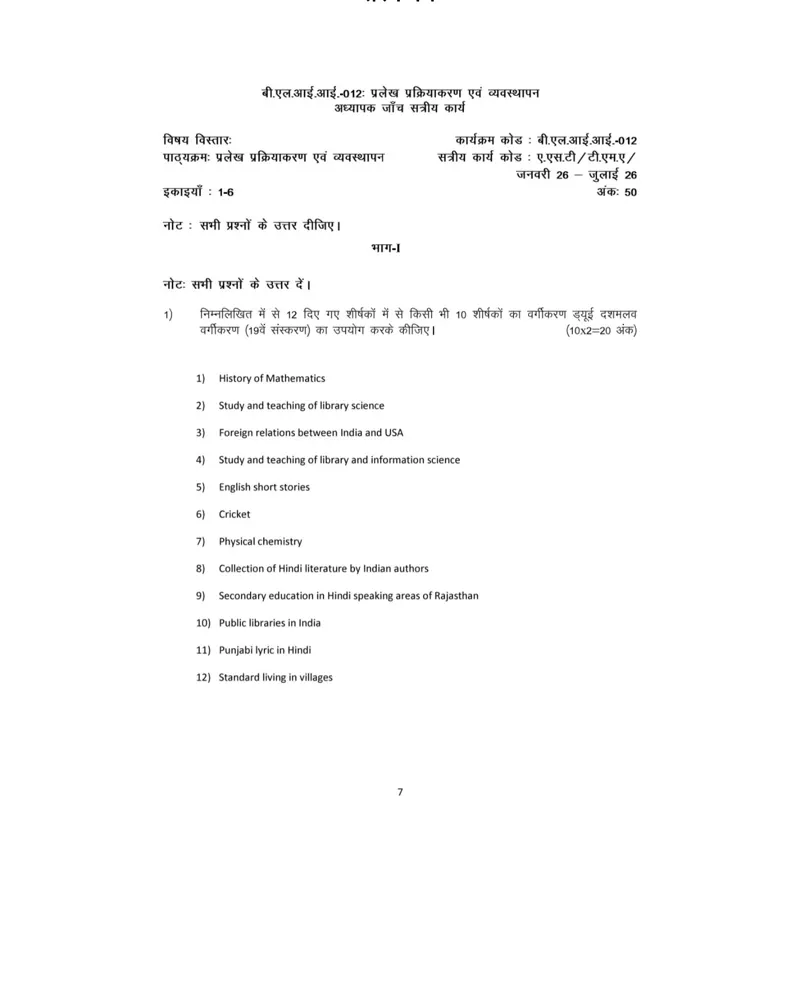
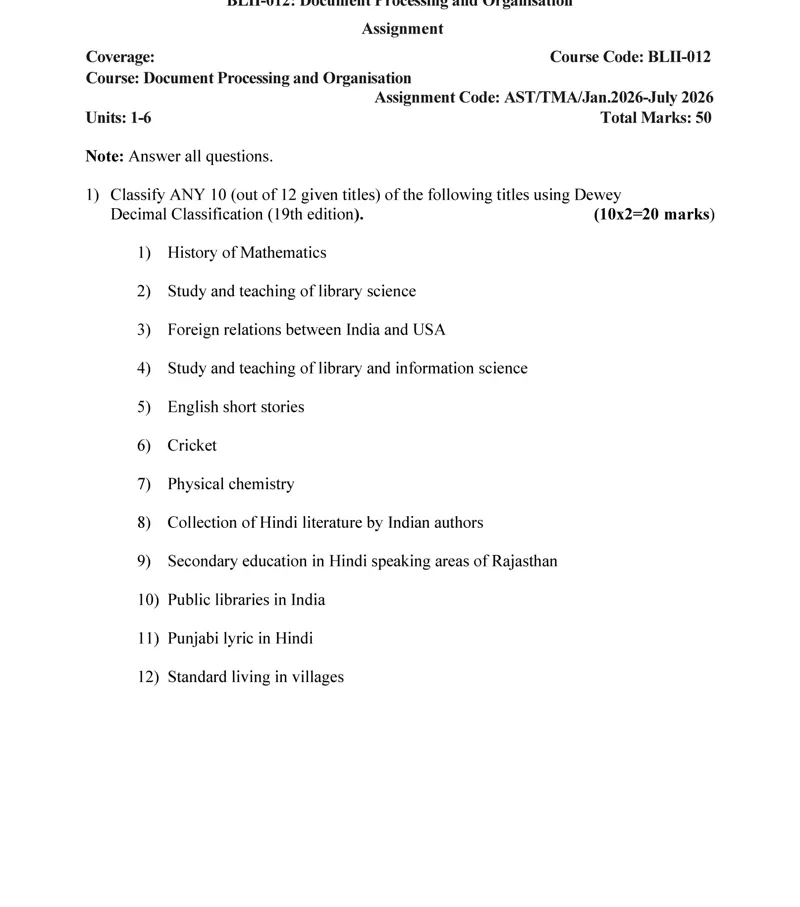
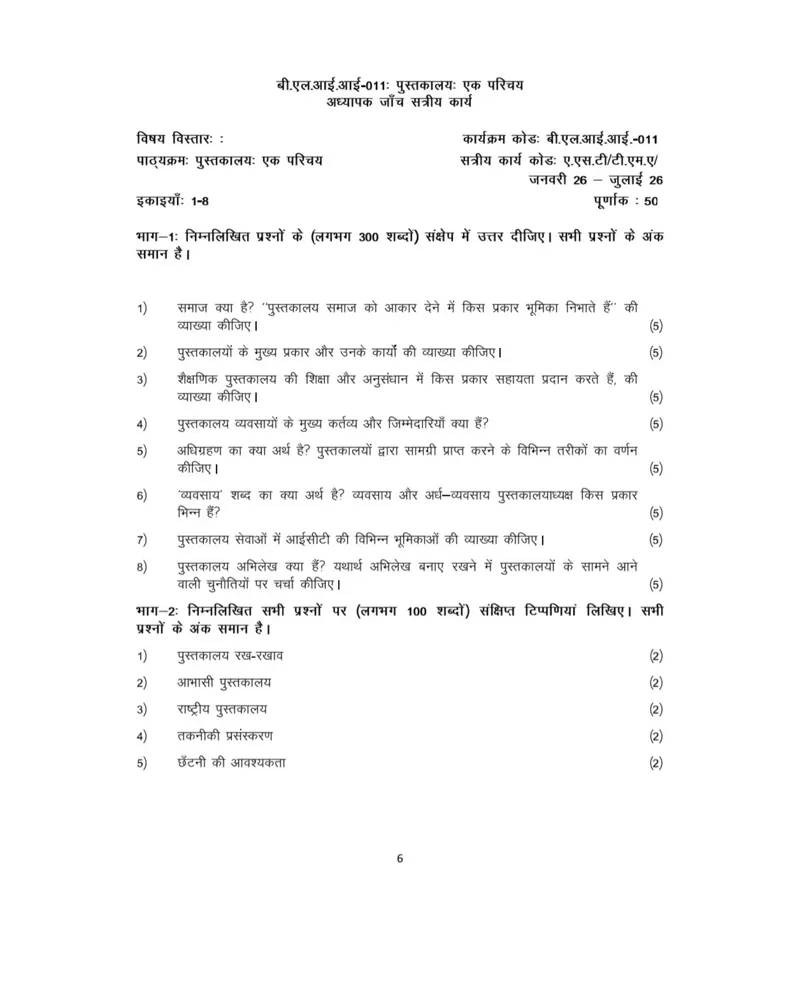
Get the study material
Assignments & guess papers for IGNOU BLIS.
Related articles

IGNOU MTTM_NEW 2026: Fees, Eligibility, Syllabus & Dates
IGNOU MTTM_NEW (Master of Tourism & Travel Management) 2026 — full guide to eligibility, ₹18,200 fee, 80-credit syllabus, and how MTTM_NEW differs from old MTTM.
Read →
IGNOU MAAE : Eligibility, Fee, Syllabus, PGCAE/PGDAE
IGNOU MAAE 2026 – eligibility, Rs. 8,700/year fee, 80-credit syllabus, PGCAE/PGDAE exit points, optional courses & career scope.
Read →
IGNOU MADE : Fee, Eligibility, Syllabus & Full Guide
IGNOU MADE (Master of Arts in Distance Education) 2026 — full guide to fee (₹7,500/year), eligibility, syllabus, PGDDE lateral entry & MADE vs MADEOL.
Read →